Blog

Check out our latest blog posts:

 Featuring tips, advice, and stories from other clients

Christmas Morning Pancake Recipe

Christmas Morning Pancake Recipe

Christmas Morning Pancake Recipe: Start by adding the cranberries, maple syrup, orange zest and the cinnamon stick to a pan and cook over a medium light. Next, blitz the porridge oats in a food processor until a flour type consistency is formed and pour into a bowl....

read more
Lactose Sensitivity: Why Dairy Bothers You Sometimes 

Lactose Sensitivity: Why Dairy Bothers You Sometimes 

If dairy is fine one day but leaves you feeling uncomfortable the next, you might describe it as lactose sensitivity. Many people use this phrase when their reaction to dairy feels on-and-off or hard to predict.  It’s worth noting that “lactose...

read more
Bloating and wellness: why it matters

Bloating and wellness: why it matters

Bloating is often brushed off as “normal”, but when it happens regularly it can affect far more than your stomach. It can change how you feel in your clothes, how you sleep, how you move through your day, and how confident you feel showing up to training, work,...

read more
Why am I lactose intolerant? 

Why am I lactose intolerant? 

If dairy has started leaving you feeling bloated or uncomfortable, you might be wondering: why is this happening now? Lactose intolerance is common and it can show up at different stages of life. The reassuring part is that it’s usually manageable, and it does not...

read more
Pumpkin Cookie Recipe Page (Full Dairy, Autumn)

Pumpkin Cookie Recipe Page (Full Dairy, Autumn)

Pumpkin Spice Cookies – An Autumn Favourite:  Preheat oven to 180°C (160°C fan). Line a baking tray with parchment paper. In a medium bowl, whisk together the flour, baking soda, cinnamon, nutmeg, ginger, cloves, and salt. In a separate large bowl, beat the butter and...

read more
Whole Roasted Butternut Squash

Whole Roasted Butternut Squash

Method to make Whole Roasted Butternut Squash: Preheat the oven to `180°C. Slice the butternut squash lengthways down the middle and scoop out the seeds*. Drizzle the squash with olive oil and rub in the rosemary, oregano, salt and pepper. Place on a baking tray and...

read more
Sweet Potato Fish Pie

Sweet Potato Fish Pie

Haddock and cod are particularly rich in iodine a key nutrient that poses risk of deficiency when milk and dairy are omitted from the diet. Iodine is important for regulating thyroid function and supporting cognitive development in fetuses and small children. You can...

read more
Mushroom & Tofu Stir Fry

Mushroom & Tofu Stir Fry

Mushroom & Tofu Stir Fry is a great meal. Mushrooms contain vitamin D which is essential for the absorption of calcium and supporting mental wellbeing. Leaving mushrooms on a window sill (stalk side facing up) can increase the amount of vitamin D they contain....

read more
Almond & Prune Energy Balls

Almond & Prune Energy Balls

This recipe for Almond Prune Energy Balls contains calcium from the almonds and iodine from the prunes. Calcium and iodine are two key nutrients which pose a risk of deficiency when an individual cuts dairy from their diet. Calcium is vital for supporting bones, teeth...

read more
Mozzarella, Sweet Potato & Pea Frittata

Mozzarella, Sweet Potato & Pea Frittata

Method: 1. Preheat the oven to 180C. 2. Chop the sweet potato into small cubes, drizzle in 1tbsp oil and place them in the oven for 10 minutes. 3. In an oven proof pan heat 1tbsp oil over a medium heat. 4. Finely slice the onions and leek and add to the pan with the...

read more
Creamy Salmon & Veggie Pasta

Creamy Salmon & Veggie Pasta

Method for Salmon Veggie Pasta: 1. Preheat the oven to 180C. 2. Place the salmon on a foil lined tray. Add the salt, pepper and lemon juice and fold up into a parcel. Place in the oven for 15-20 minutes. 3. Heat the vegetable stock on the hob and place the pasta into...

read more
Cheese and Roasted Vegetable Quesadillas

Cheese and Roasted Vegetable Quesadillas

Method for Cheese and Roasted Vegetable Quesadillas: Preheat the oven to 180C. Cut the courgette, pepper and sweet potato into small cubes. Ensure you leave the skin on to maintain the fibre. Place the vegetables on a baking tray and toss with the olive oil, smoked...

read more
Dairy-Free Chocolate Fudge Celebration Cake

Dairy-Free Chocolate Fudge Celebration Cake

Icing for Dairy-Free Chocolate Fudge Celebration Cake: 300g Icing sugar 90g Cocoa powder 70g Coconut oil (softened not melted) 1 Tbsp Oat milk 1 Punnet of fresh strawberries Method: 1. Preheat the oven to 175°C (fan). 2. Sift together the flour, baking powder,...

read more
Mushroom and Spinach Risotto served with Baked Cod

Mushroom and Spinach Risotto served with Baked Cod

For the Cod: 2 Filets of cod 4 Sprigs of fresh thyme Juice of ½ lemon Salt and pepper to taste Method: 1. Preheat the oven to 180°C. 2. Begin by adding the cod with fresh thyme, lemon juice, salt and pepper to a baking tray and wrap it in foil. Place in the oven to...

read more
Broccoli, Pea and Cheddar Risotto

Broccoli, Pea and Cheddar Risotto

Method for risotto: 1. Start by steaming the broccoli florets in a steamer for 4-5 minutes. 2. Next, add the butter to a pan and place it over medium to high heat. Mince the garlic and finely chop the onion and add it to the pan along with the garlic. Allow the onions...

read more
Pitta Pizzas

Pitta Pizzas

Method for Pitta Pizzas: Preheat the oven to 180˚C.1. Chop the pepper, courgette and mushrooms into cubes and drizzle with olive oil, salt, pepper and mixed herbs. Add them to the preheated oven for 15-20 minutes. 2. In the meantime, prepare the sauce. Heat the olive...

read more
Fully Stuffed Sweet Potato

Fully Stuffed Sweet Potato

Method for Fully Stuffed Sweet Potato: Preheat the oven to 180˚C.1. Prick the sweet potatoes with a knife in a few places and then place them on a baking tray in the oven. Cook for 45-60 minutes or until soft. 2. In the meantime, heat the oil in a pan and chop the...

read more
Breakfast Muffins

Breakfast Muffins

Method for Breakfast Muffins: Preheat the oven to 180˚C. Add the oats to a food processor and blitz until smooth. In a separate bowl mash the bananas and then add the eggs, vanilla extract, honey and mix well. Gently stir in the yoghurt and the melted butter (ensure...

read more
Supporting Your Child Through Lactose Intolerance

Supporting Your Child Through Lactose Intolerance

Lactose intolerance is the inability to break down the milk sugar, lactose due to an impairment in the production of the required enzyme, lactase. Whilst a lactose intolerance is uncomfortable it’s not life-threatening whereas a dairy allergy can be.  Identifying...

read more
Navigating Life with A Child Who Has A Lactose Intolerance

Navigating Life with A Child Who Has A Lactose Intolerance

Navigating life with a child who has lactose intolerance doesn’t have to be as daunting as you may think. When mismanaged, lactose intolerance may evoke discomfort, but it is not dangerous. There are many myths associated with lactose intolerance, therefore in this...

read more
Soothing Your Stomach

Soothing Your Stomach

Lactose intolerance is a common condition although symptoms can vary between individuals and can be affected according to tolerance levels and gut bacteria. Some of the most common symptoms include diarrhoea, bloating, flatulence, stomach pain and constipation. It’s...

read more
The Importance of Dairy

The Importance of Dairy

It’s commonly understood that dairy is a particularly important component of the diet in childhood due to its calcium content. Although, as individuals age it appears that the emphasis on the importance of dairy is often reduced over time. Whilst calcium is vital for...

read more
Cutting Through the Jargon

Cutting Through the Jargon

In today’s society when it comes to nutrition, there’s always the next trend or a scaremongering headline. This information can often seem confusing, scary and outright bewildering. In this article, you’ll learn about what lactose intolerance is, how to recognise the...

read more
Living With a Lactose Intolerance

Living With a Lactose Intolerance

Lactose intolerance is not uncommon and should you be diagnosed, you needn’t feel alone. Managing your lactose intolerance does not have to take over your life, it should not cause stress or anxiety and it should definitely not affect your social life. Being equipped...

read more

Our Products

Milkaid Junior Tablets (60’s)

£9.99

Sale!

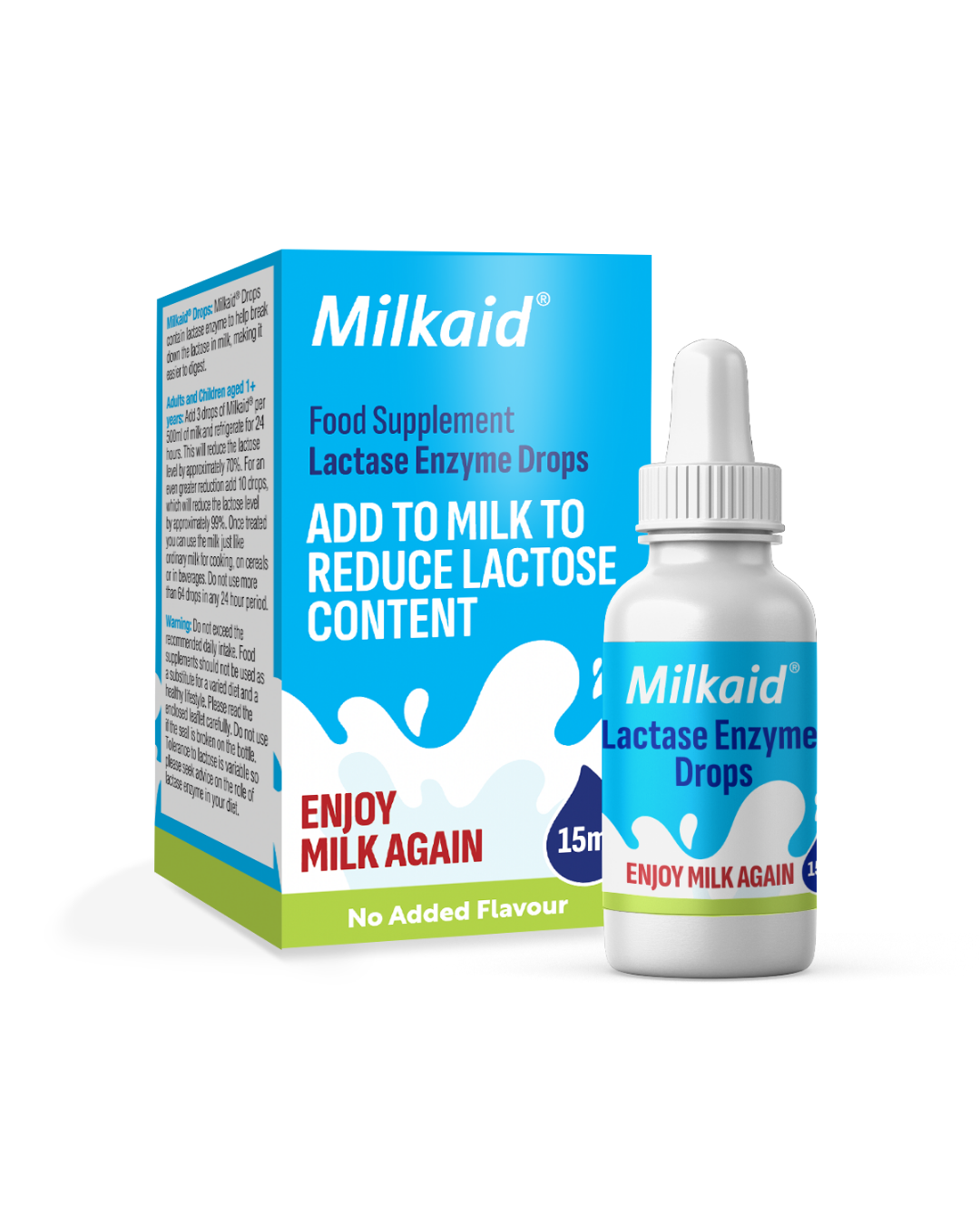
Milkaid Lactase Drops (15ml)

Original price was: £15.99.Current price is: £11.99.

FAQ’s

How do I know if my child has lactose intolerance?

Your child will exhibit symptoms such as gastrointestinal discomfort, flatulence, bloating, diarrhoea or in some cases nausea and vomiting following the consumption of dairy products or lactose-containing foods. In some cases, these symptoms can be indicative of other gut disorders and therefore it’s best to seek advice from your GP.

How do I get my child tested for lactose intolerance?

Firstly, it’s recommended to seek advice from your GP to rule out any other underlying conditions, your doctor should be able to offer a lactose intolerance test in the form of a hydrogen breath test or an elimination diet. Both tests are non-invasive and are easy to carry out. The hydrogen breath test requires the consumption of a lactose solution and a breath test to measure hydrogen particles in the breath.

Is there a cause for lactose intolerance?

Lactose intolerance is a result of a lack of lactase in the body. Lactase is the enzyme that is required to break down the milk sugar, lactose, into galactose and glucose which are then utilised in the body for energy. There is no such cause of lactose intolerance and whilst some children may experience lactose intolerance for life, others may grow out of it.

What’s the difference between intolerance and an allergy?

An allergy stimulates an IgE mediated immune response and is usually activated within 30 minutes to 2 hours of exposure to the allergen. Allergic responses can vary from mild to severe (e.g. anaphylaxis) and often require a fast intervention such as antihistamine. An intolerance does not involve the immune system and the effects are often milder. Additionally, symptoms of intolerance may take longer to present themselves.

Does lactose intolerance mean my child must avoid diary entirely?

Absolutely not, dairy is a rich source of many micronutrients such as calcium, iodine, vitamin D and B12. These nutrients play important roles in supporting cognitive development, bone health and energy function. Most children with lactose intolerance will be able to tolerate low lactose foods such as some cheeses, butter and low lactose yoghurt. It’s common to be able to tolerate around one cup of milk too.

Milkaid® Junior Tablets – a strawberry flavoured chewable tablet, are a great way to ensure that your child can still enjoy their favourite lactose-containing foods. Milkaid® Junior provides the enzyme lactase to help break down the milk sugar lactose and therefore limit symptoms of lactose intolerance.

How should I approach my child’s lactose intolerance with other adults?

Leaving your child with another adult can be scary but it’s important to remember that lactose intolerance is not harmful. It’s recommended to mention to the adult in charge that your child doesn’t tolerate dairy well although avoid scaremongering and ensure to reassure them if the child consumes too much dairy by mistake it’s not dangerous. You can also send the child with Milkaid® Junior Tablets to consume before having any dairy food or beverages so everyone involved feels reassured.

How can Milkaid Junior help?

Milkaid® provides the missing link in lactose intolerance. Milkaid® Junior delivers the lactase to help break down the milk sugar, lactose and therefore helps to limit symptoms. Milkaid® Junior must be taken prior to consuming the lactose-containing food.

How do I get my child tested for lactose intolerance?

Firstly, it’s recommended to seek advice from your GP to rule out any other underlying conditions, your doctor should be able to offer a lactose intolerance test in the form of a hydrogen breath test or an elimination diet. Both tests are non-invasive and are easy to carry out. The hydrogen breath test requires the consumption of a lactose solution and a breath test to measure hydrogen particles in the breath.

What foods are lactose found in?

Lactose is largely found in dairy foods but can also be found in some medicines, supplements and pre-prepared or ultra-processed foods. It’s always worth checking food labels as dairy will be listed as an allergen.

Food inspiration for children

Breakfast Muffins

Breakfast Muffins

Method for Breakfast Muffins: Preheat the oven to 180˚C. Add the oats to a food processor and blitz until smooth. In a separate bowl mash the bananas and then add the eggs, vanilla extract, honey and mix well. Gently stir in the yoghurt and the melted butter (ensure...

read more
Fully Stuffed Sweet Potato

Fully Stuffed Sweet Potato

Method for Fully Stuffed Sweet Potato: Preheat the oven to 180˚C.1. Prick the sweet potatoes with a knife in a few places and then place them on a baking tray in the oven. Cook for 45-60 minutes or until soft. 2. In the meantime, heat the oil in a pan and chop the...

read more
Pitta Pizzas

Pitta Pizzas

Method for Pitta Pizzas: Preheat the oven to 180˚C.1. Chop the pepper, courgette and mushrooms into cubes and drizzle with olive oil, salt, pepper and mixed herbs. Add them to the preheated oven for 15-20 minutes. 2. In the meantime, prepare the sauce. Heat the olive...

read more
Broccoli, Pea and Cheddar Risotto

Broccoli, Pea and Cheddar Risotto

Method for risotto: 1. Start by steaming the broccoli florets in a steamer for 4-5 minutes. 2. Next, add the butter to a pan and place it over medium to high heat. Mince the garlic and finely chop the onion and add it to the pan along with the garlic. Allow the onions...

read more
0
    0
    Your Cart
    Your cart is emptyReturn to Shop